Kato Paphos Part 6 - Agia Kyriaki
Close Up
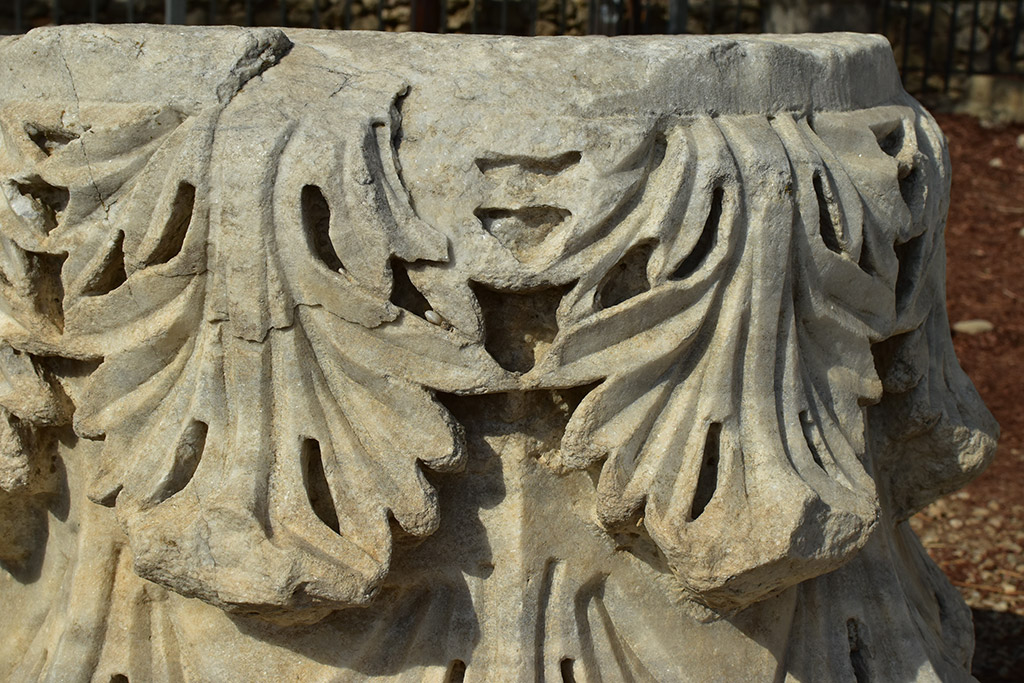
Some of the plinths are in pretty good nick, considering how old they are.
To the west of the narthex there was an atrium surrounded by four porticoes (quadriportico). The pavement of both porticoes and the central courtyard were covered with mosaics. In the centre of the atrium there was a circular fountain. Three gates on the western wall of the atrium gave access to the complex from the stone-paved street which is further to the west.
In the mid 7th century, probably during the first Arab raids, some crude alterations took place, and later, towards the end of the 7th century, the Early Christian basilica was abandoned. The activity of the Arab invaders is indicated by some Arabic inscriptions preserved on some of the columns of the nave. These are invocations to Allah for the fallen Muslim warriors. The columns were still standing while incised, before the partial collapse of the building probably by the earthquakes of 685AD.
Familiar Face
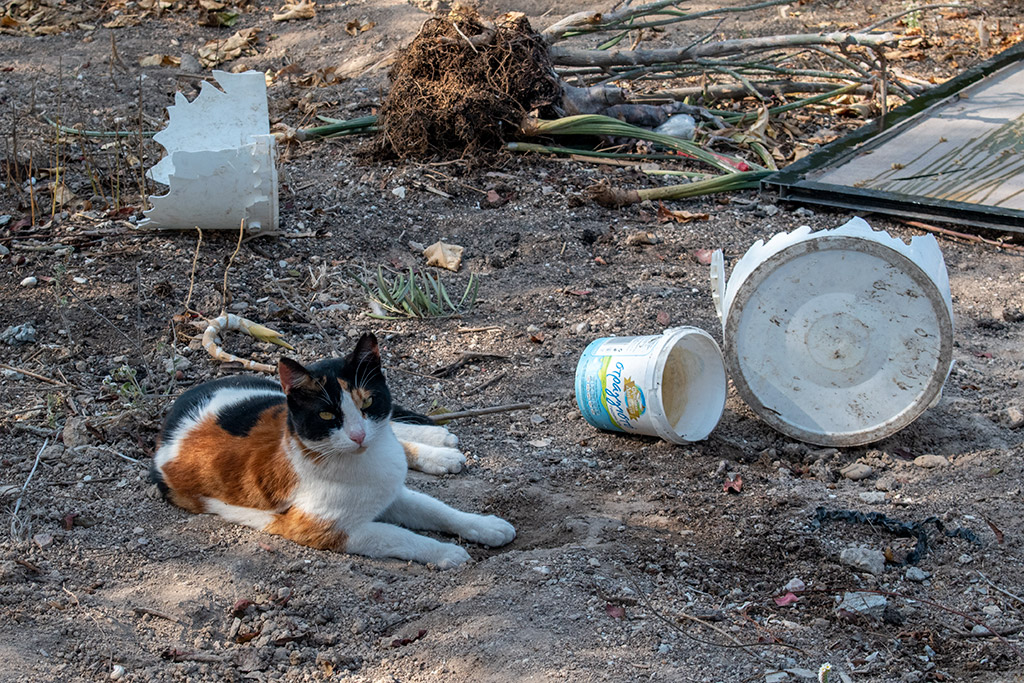
There are lots of cats around the church, and this one looked strangely familiar.
After the final destruction and abandonment of this enormous Early Christian complex, the area was converted into a quarry where worked building material was ready to be reused for the construction of secular and ecclesiastical edifices. Lime kilns were constructed for the recycling of the marble architectural pieces into lime.
The devotional use of the area was preserved; a much smaller church was erected within the ruins of the early Christian basilica (not visible today). This church was incorporated into the eastern edge of the nothern inner aisle and probably maintained its episcopal status. It was transformed and rebuilt several times over many centuries of existence. It was finally demolished around 1500 when the existing church of Ayia Kyriaki was constructed.
Back In Time
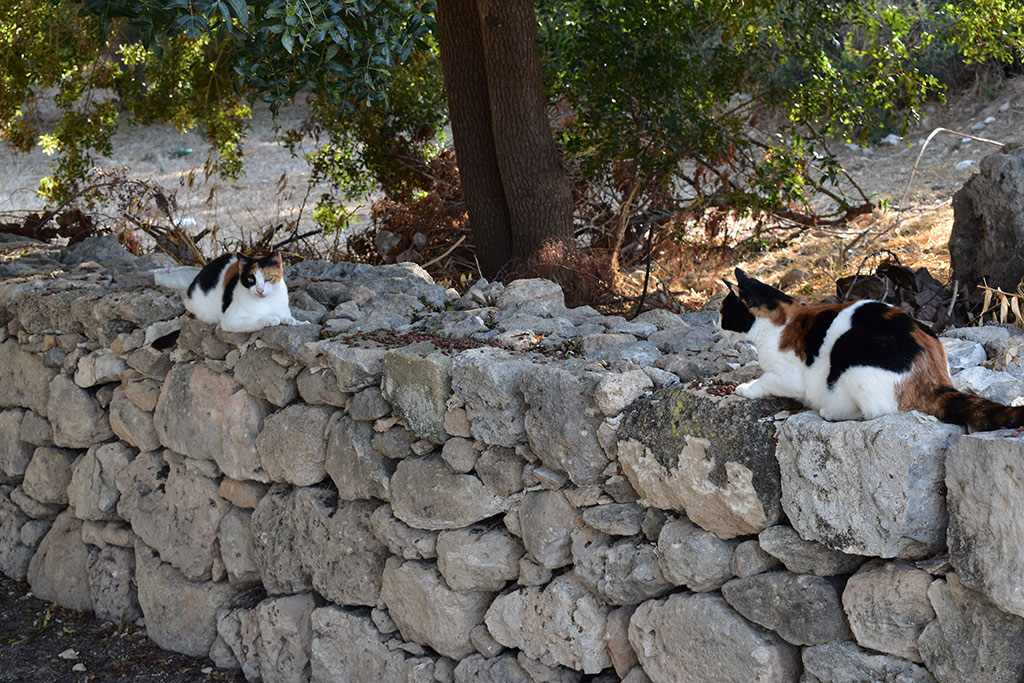
Sure enough, here they are again. I think its the one on the right.
From The Corner
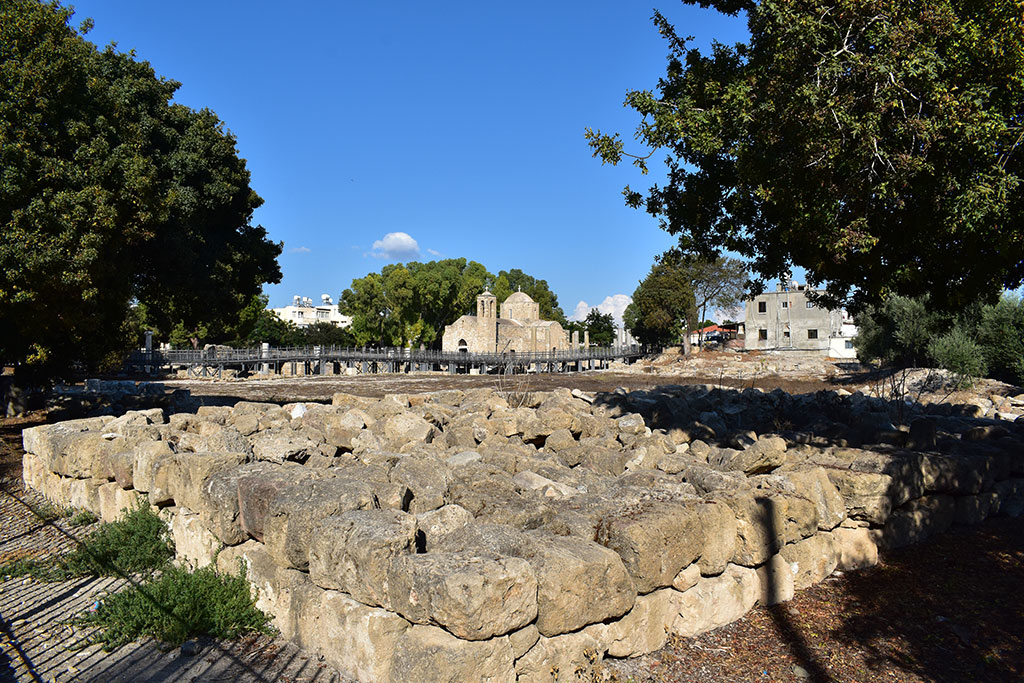
Ok, so we are now in the corner of the grounds. This is a good place to start our tour from.
Ancient Arches
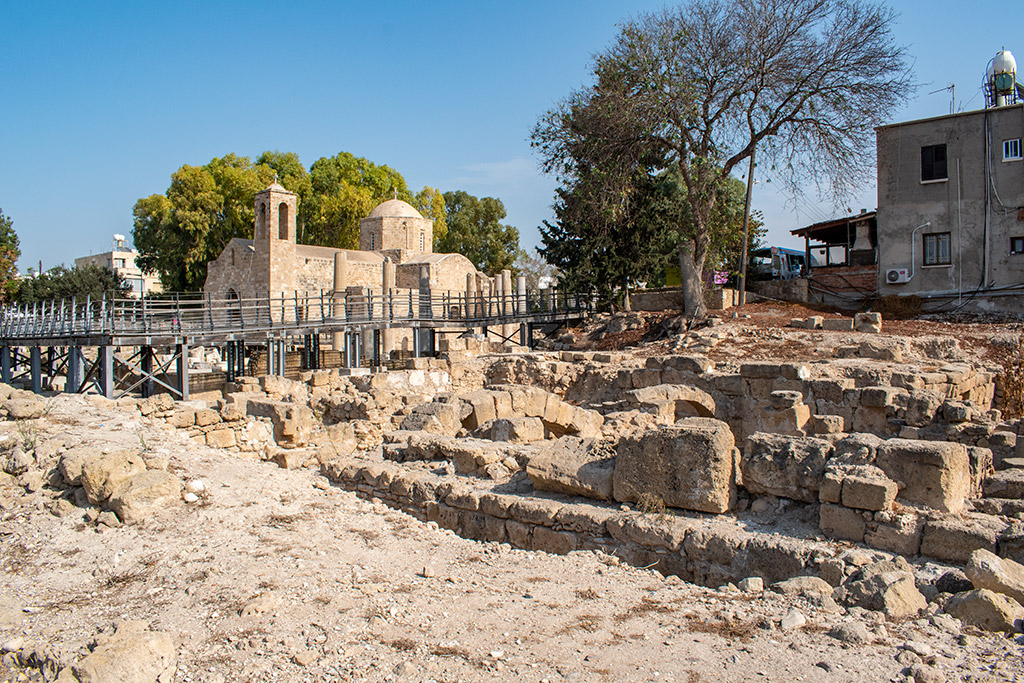
Moving closer to the church, you can see some of the ruins mentioned in the sign. Those arches indicate that the original floor level was a lot lower than it is now. I guess hundreds of years of earthquakes and dust storms takes its toll...
Page 2 of 10

Related Blogs:
Kato Paphos Part 1
Over the years we've written several series of articles about Old Paphos. We've also covered Kato Paphos, but not to the same extent. We've decided to rectify that so over the next few weeks we will be exploring downtown and reporting what we find. We start at the castle...
Kato Paphos Part 2 - The Sea Front
In Part 2 of our in-depth look at Kato Paphos, we take in the Autumn sun and walk along the sea front...
Kato Paphos Part 3 - Bar Street
In the third part of our look around Kato Paphos we turn the spotlight on Bar Street. Loved and loathed in equal measure, the area has certainly seen better days. Indeed, if you visit during the day, as we do in this article, you could be forgiven for thinking that it is closed. But there is still plenty of life there, as you shall see...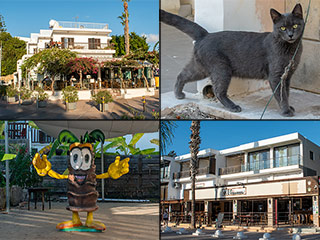
Kato Paphos Part 4 - Pingouino's Area
In the next part of our look around Kato Paphos, we leave Bar Street behind and head back to the sea front before heading towards the main SODAP beach.
Kato Paphos Part 5 - The Back of the Sea Front
In part 5 of our look around Kato Paphos, we head back towards the Archaeological Park, taking the road that runs behind the sea front. As you will see, we got distracted along the way...Related Pages

MapKato Paphos Part 6 - Agia Kyriaki
In Part 6 of our Tour of Kato Paphos we head inland to visit Agia Kyriaki and St Paul's Pillar. We also say hello to an old friend...
Good Pages To Visit

FB PagePaphos Life on Facebook
Like us on Facebook and stay notified of new blog posts.

FB PageOur Facebook Chat Group
Paphos Chat has been created for people who like our site and want to chat using Facebook. You can also easily upload photos of any size here. A lot of people are members of the Facebook chat group and the main forum. It's entirely up to you.

ListBlog Locations
Planning a day out? Then use our map of blog locations as a handy guide. Some of the places we visit our closer to each other than you might think, so take a look and start planning your next adventure...
eBookCyprus Road Trip 01: the Kathikas - Panagia Loop
Let me take you on a journey around the region of Paphos, Cyprus. Starting at Paphos itself, we travel to Akoursos, then Kathikas, Kritou Terra and Simou. We continue past Lasa and Kannaviou, before taking in the delights of Panagia. Getting a bit more adventurous, we visit the abandoned villages of Statos and Agios Fotios, before passing through Choulou, Letymbou and Polemi, and rejoining the main Paphos - Polis road.
The route is suitable for all types of vehicle, and requires no off-roading. The guide contains about 130 photographs including shots of all the road signs you need to pay attention to, as well as some of the highlights you may experience along the way.
There are also several maps which will help you keep your bearings.
You can do this journey in a day, or you can break it up into chunks. You can also do it in reverse, to get some completely different views. It is entirely up to you.