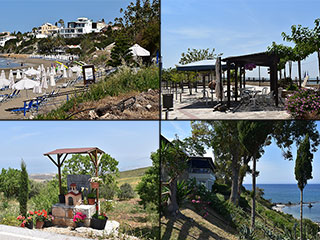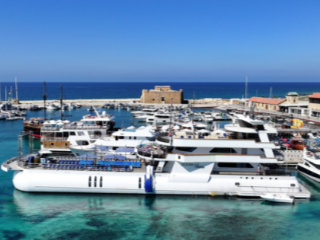
Paphos Archaeological Museum
Coins
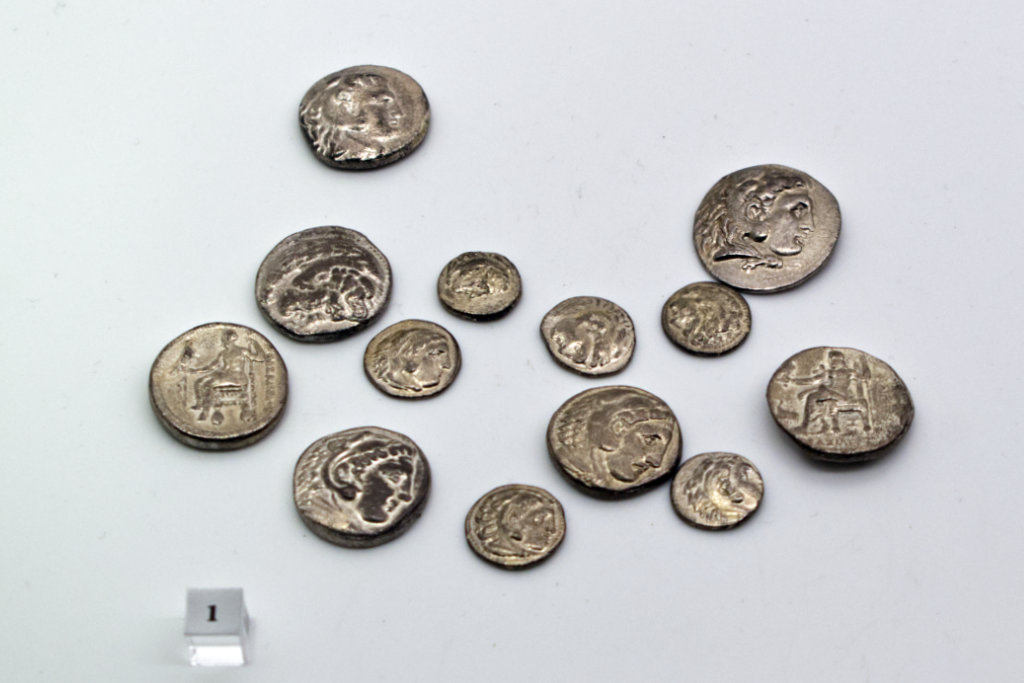
I wonder what these coins will have been used to purchase in their day? And how did they work?
Coin Press
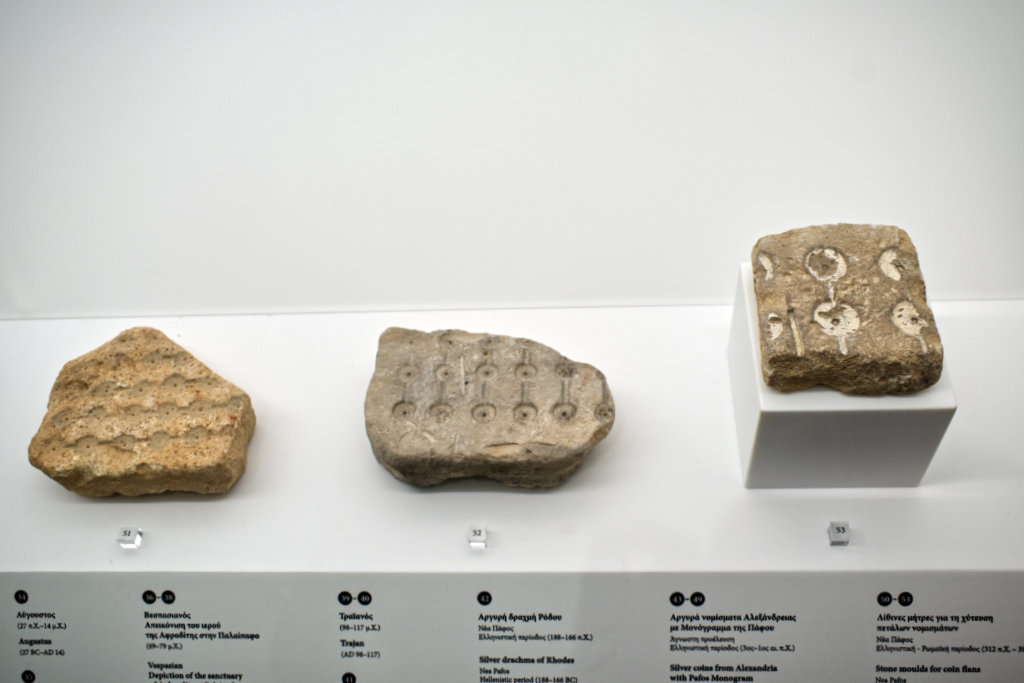
What I mean by that, is what was to stop people just making more and more coins? The answer is simple: the money had intrinsic value. Coins were valuable because they were made of precious metals, not because a government declared them to be. Merchants often carried scales to weigh coins to ensure their value.
Hellenistic Amphorae
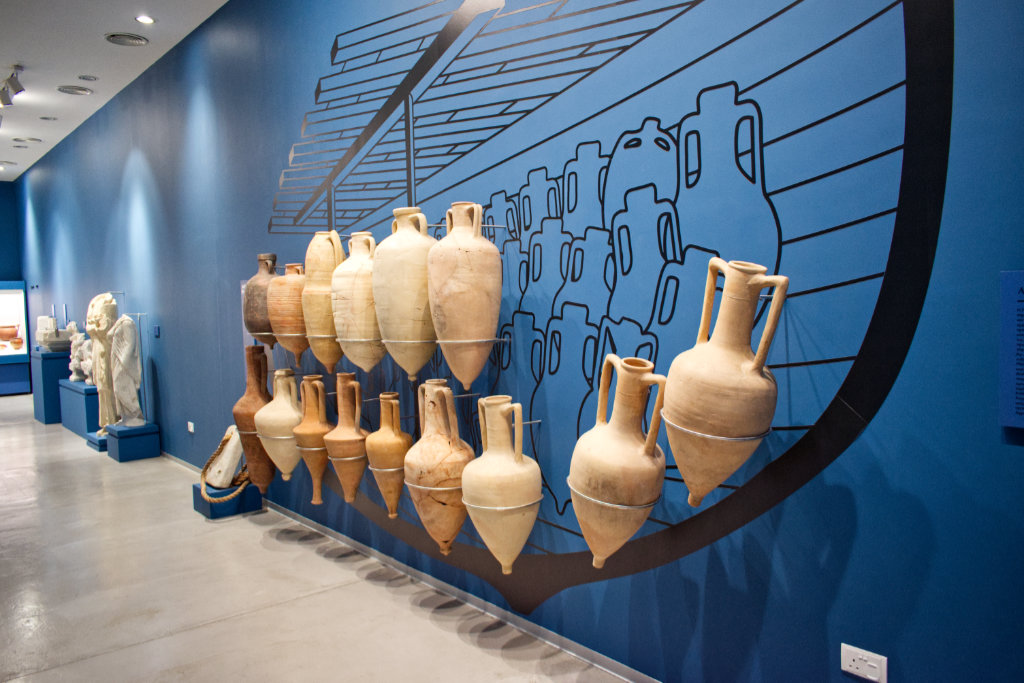
Here's some more information on the Hellenistic and Roman Periods, taken from Information signs at the museum.
At the end of the 4th century BC, Cyprus comes under the control of the Ptolemies of Egypt as a unified state. At the beginning of the Hellenistic period, in what is now the modern city of Kato Pafos, a new city was founded. Here the administrative and commercial centre had their seat. The new city was called Nea Pafos, in juxtaposition to the old city which is known from there on as Palaipafos. Nea Pafos was built on a grid plan of vertical and horizontal streets, known as the Hippodamian plan, in accordance with similar town plans of the large cities of the period, such as Miletos and Piraeus.
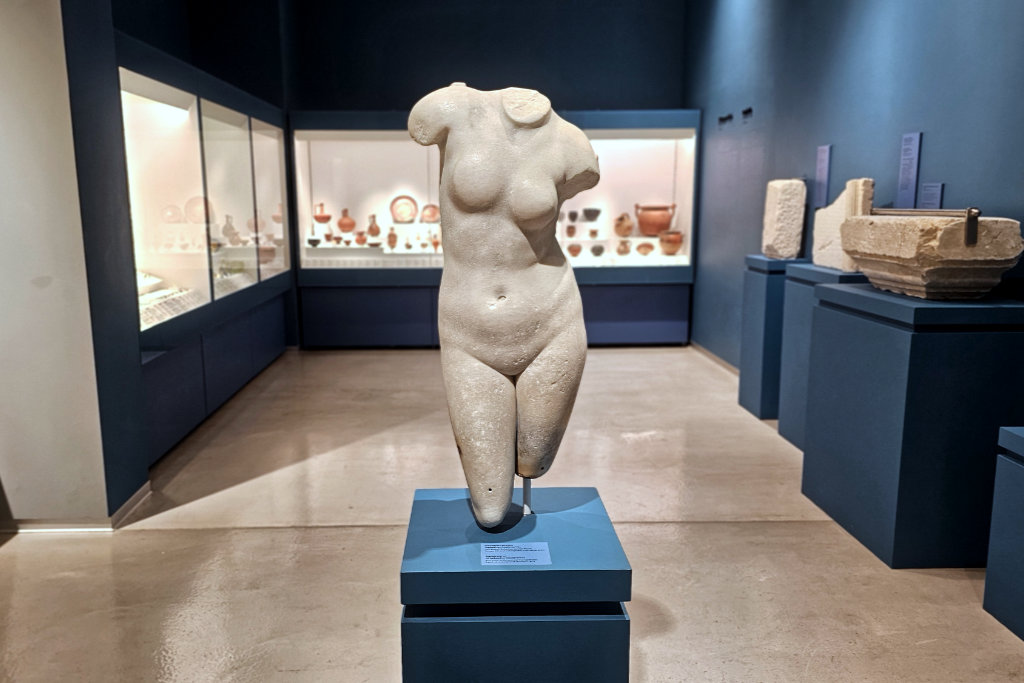
Headless
Nea Pafos succeeded Salamis as the capital of the island and the seat of the Strategos, the governor of the island, in the 2nd century BC. Nea Pafos acquired monumental buildings, such as a theatre and an Agora and became an important military and naval base, as well as a commercial port, through which an important part of the trading activities of the Eastern Mediterranean was transacted. Private residences were richly decorated with ornate wall-paintings, mosaic floors and beautiful works of art which betrayed the rise of a wealthy class of citizens, possibly merchants.
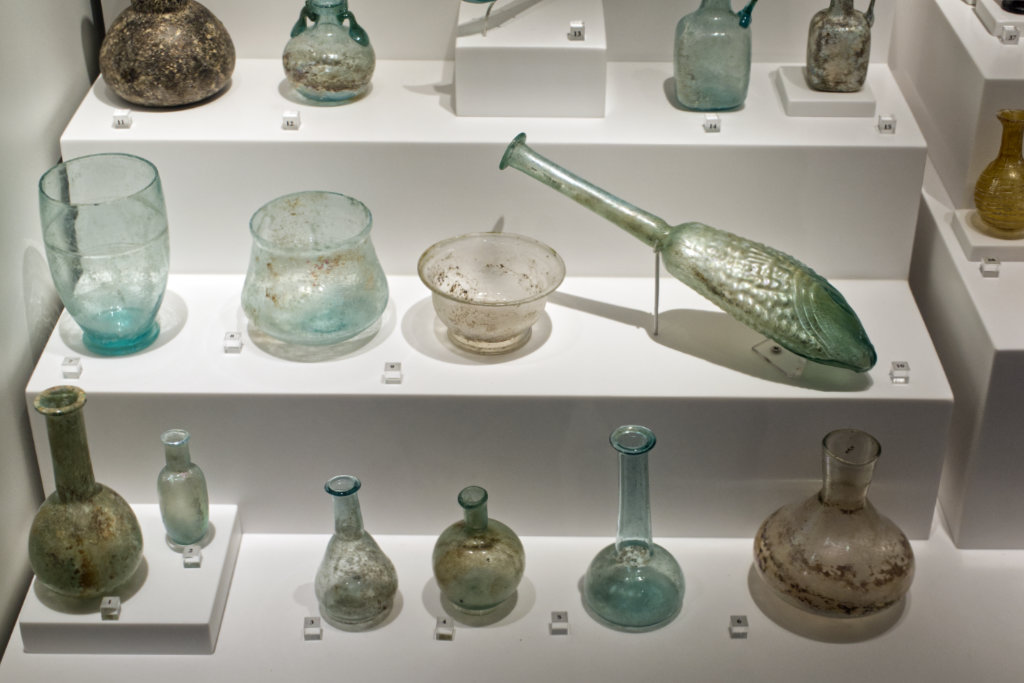
Lovely Glassware
With regard to funerary architecture, monumental tombs were carved into the bedrock, the most impressive are the well-known "Tombs of the Kings". The changes observed in the life of the people at many levels are indicative of a deep transformation in the local traditions of the previous periods, possibly as a result of external influences from Alexandria and other large centres of the Hellenistic world.
Page 6 of 8

Related Blogs:
Paphos Archaeological Park - Summary
We first blogged about the Archaeological Park a couple of years ago. It was a short blog, and focused mainly on the pretty spring flowers. Now we are returning, to give the rest of the park the attention it so richly deserves.
The Necropolis at Meletis Forest
If you drive to the Akamas along the coastal road, you will eventually come off the main road and onto a side road leading to the Akamas proper. Before you go past the Searays cafe bar, you will see a nondescript sign on your right, next to a layby.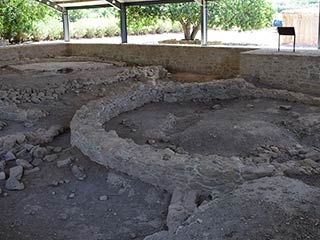
Kissonerga Mosfilia
Tucked away in the lower reaches of Kissonerga, lies a site of great historical importance. Similar in appearance to the ancient village of Lemba, which is currently closed for maintenance, Kissonerga Mosfilia is a perfect way to spend half an hour if you fancy something a little different. Like most of our findings, it was a happy accident that brought us to this ancient settlement. We were avoiding a roadblock and happened to pass this sign on our way to the coast road. Brown signs often signal something interesting, so we stopped to take a look...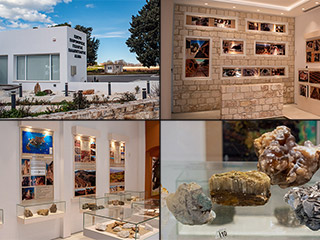
Akamas Geology And Paleontology Center
For years we have enjoyed exploring the countryside of Paphos, and especially rummaging through rocks looking for interesting fossils and crystals. I was delighted therefore to discover that the Akamas has its very own Geology and Paleontology Center, on the outskirts of Pano Arodes. Let me show you around...Related Pages

MapPaphos Archaeological Museum
There are lots of interesting archaeological sites dotted around Paphos. When they have been excavated, their contents invariably end up in the local museums, either in Nicosia or in the Paphos Archaeological Museum, which is where we are headed in this article.
Good Pages To Visit
FB PagePaphos Life on Facebook
Like us on Facebook and stay notified of new blog posts.

FB PageOur Facebook Chat Group
Paphos Chat has been created for people who like our site and want to chat using Facebook. You can also easily upload photos of any size here. A lot of people are members of the Facebook chat group and the main forum. It's entirely up to you.
ListBlog Locations
Planning a day out? Then use our map of blog locations as a handy guide. Some of the places we visit our closer to each other than you might think, so take a look and start planning your next adventure...
eBookCyprus Road Trip 01: the Kathikas - Panagia Loop
Let me take you on a journey around the region of Paphos, Cyprus. Starting at Paphos itself, we travel to Akoursos, then Kathikas, Kritou Terra and Simou. We continue past Lasa and Kannaviou, before taking in the delights of Panagia. Getting a bit more adventurous, we visit the abandoned villages of Statos and Agios Fotios, before passing through Choulou, Letymbou and Polemi, and rejoining the main Paphos - Polis road.
The route is suitable for all types of vehicle, and requires no off-roading. The guide contains about 130 photographs including shots of all the road signs you need to pay attention to, as well as some of the highlights you may experience along the way.
There are also several maps which will help you keep your bearings.
You can do this journey in a day, or you can break it up into chunks. You can also do it in reverse, to get some completely different views. It is entirely up to you.