Kissonerga Skalia Excavations
More Whorls
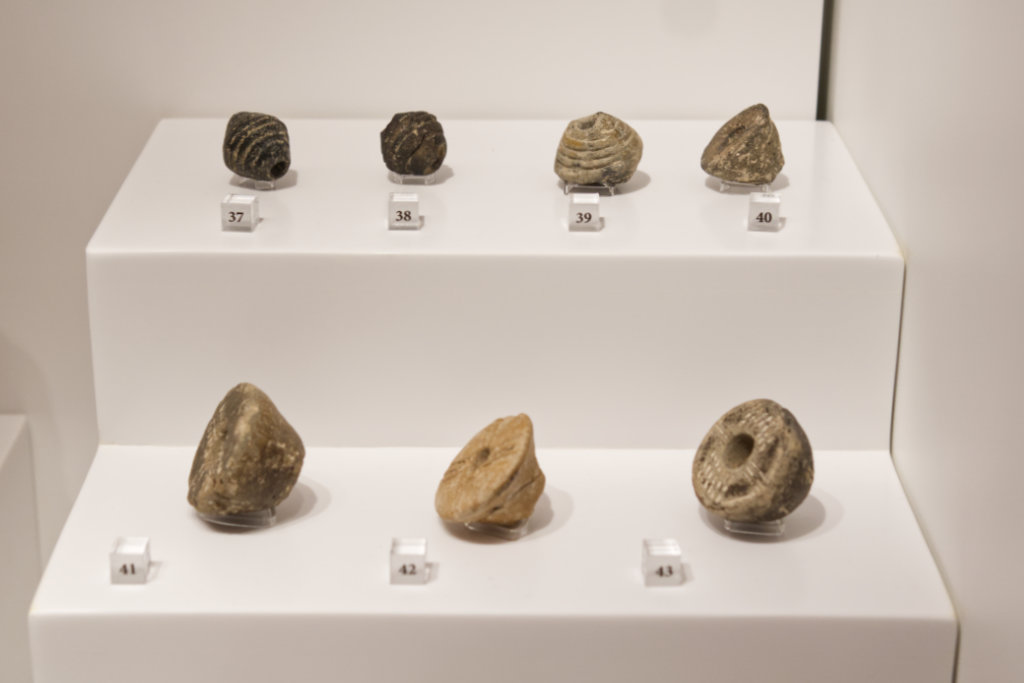
There were a lot of whorls on display, which is understandable given the industrial nature of the site.
Red Slip Ware
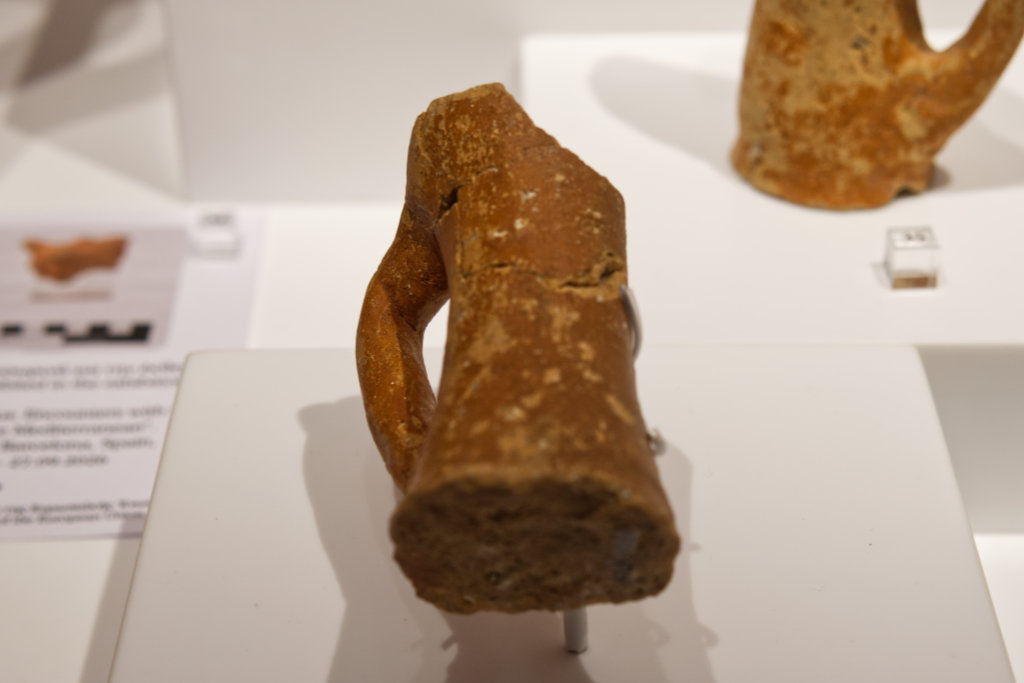
This is labelled as "Red Slip ware". They also specified the date as between 2600-2300 BC, so it is one of the older pieces.
As a child, I would be annoying and ask what slip ware meant. These days I can just google it.
Slipware is pottery decorated with slip, which is a liquid mixture of clay and water.
What is Slip?
Liquid clay: A creamy or watery blend of clay particles and water.
Contrasting colors: Potters use a slip that is a different color than the main clay body (such as white slip on red clay).
Applied wet: Put onto the pottery while the clay is still firm yet damp (called leather-hard) before the first firing.
Red Polished Ware
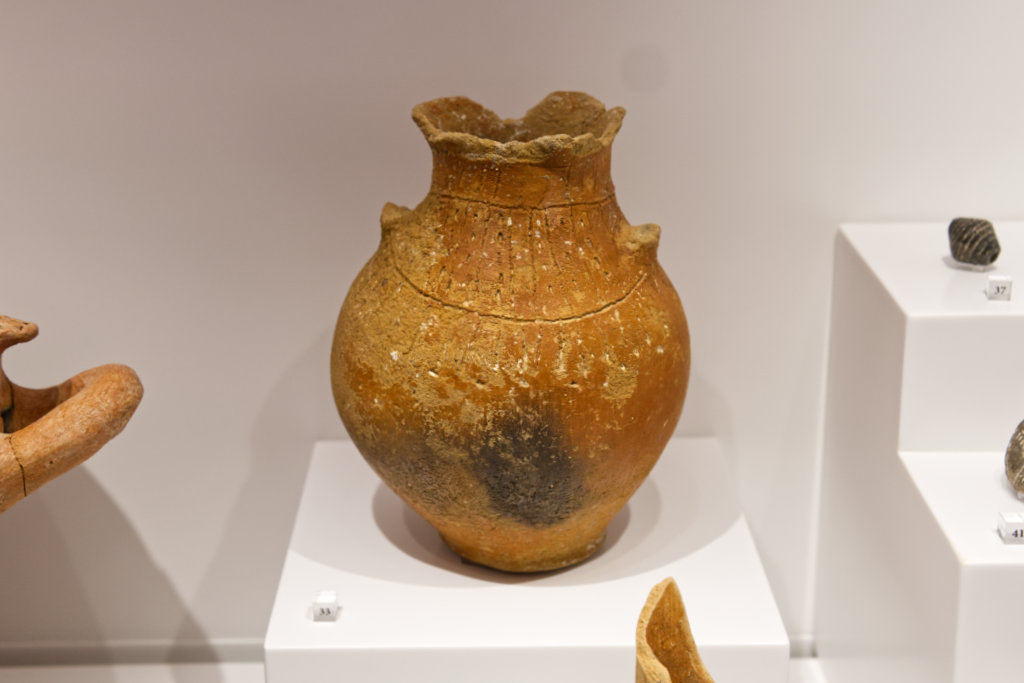
This is a different type of pottery. It turns out, there are a number of ancient pottery types in Cyprus. If you want to find out more about them, check out this compendium on the Ancient Cyprus website.
What?
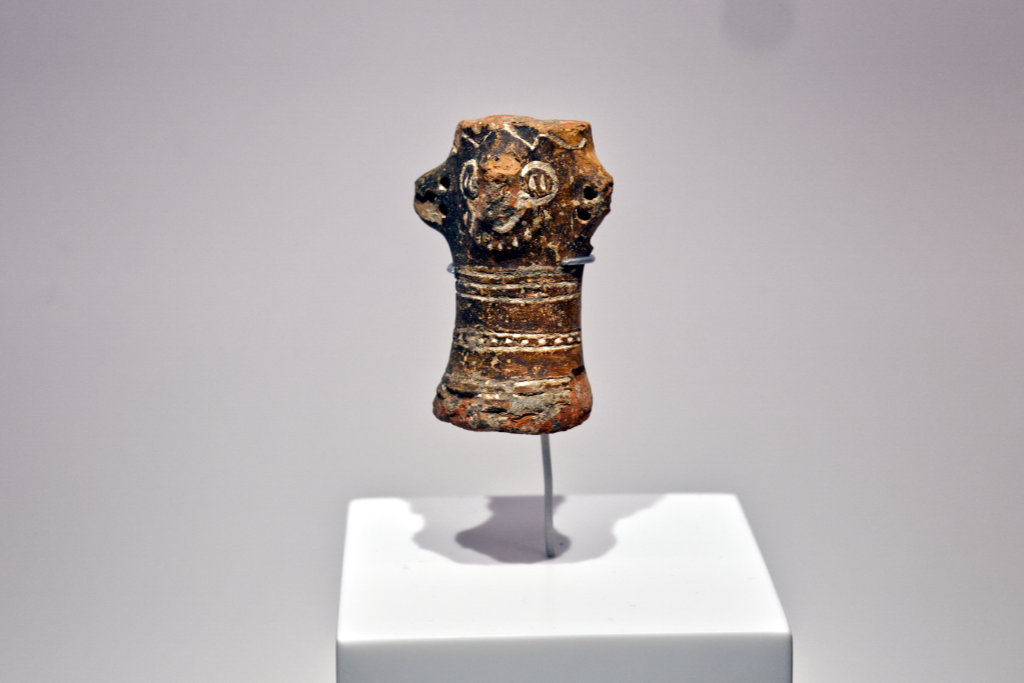
This is another example of Red Polished ware, and is actually labelled as an Ear lug vessel. What on Earth is that? Let's have another google. Actually, let's ask Grok this time, for a change:
An ear-lug vessel (or ear-lug pot/jar) is a distinctive form of Early Bronze Age Cypriot pottery, typically from the Early Cypriot I period (roughly 2300–2150/2100 BC).
It is a handmade ceramic container, usually in Red Polished Ware (often Red Polished I, sometimes with black-topped or mottled effects). Typical features include:
- An ovoid or similar body with a flat or small base.
- A short-to-tall, thick or cylindrical neck with a round or slightly out-turned rim.
- Two opposed vertical lugs (projections or flange-like handles) on the sides of the neck or at the body-neck junction. These are often unpierced and shaped somewhat like ears, which gives the type its name.
Ancient History
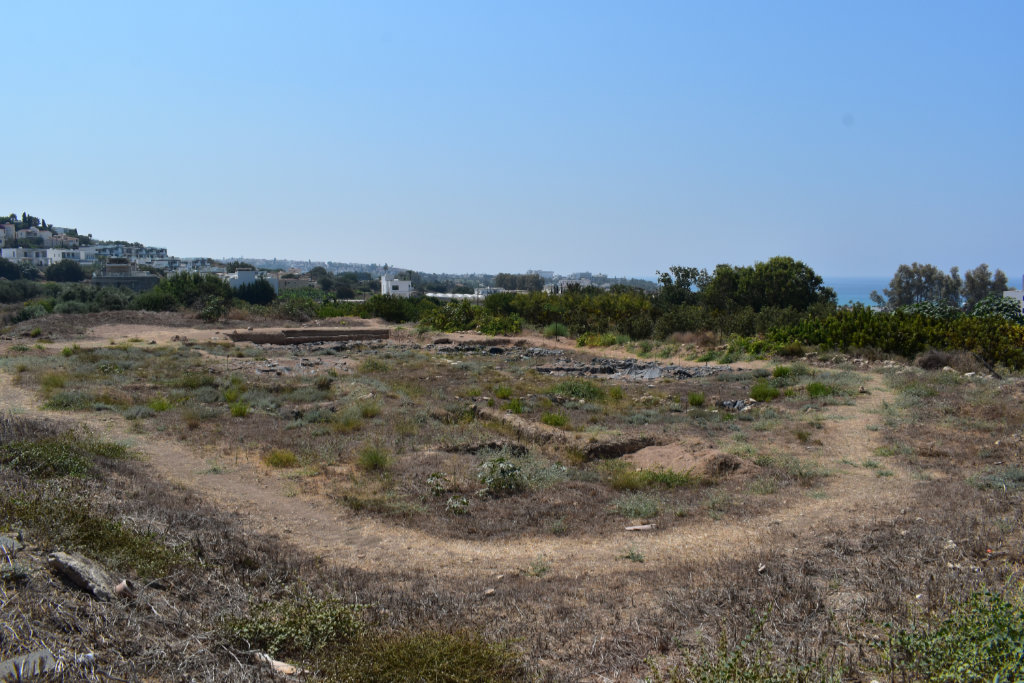
So, to summarise, Kissonerga Skalia was a mainly industrial site which existed in one form or another for about 1000 years. That's unfathomable really. The latter buildings were only there for 150 years, but that is still a few generations. There's obviously more to it than what you can see in the museum at the moment. But my closing thought concerns where the people who worked here actually lived. If this was their place of work, where did they commute from? How many more sites are dotted around Paphos in random fields, containing historical information mere inches from the surface?
Page 3 of 3
Related Blogs:
Kissonerga Mosfilia
Tucked away in the lower reaches of Kissonerga, lies a site of great historical importance. Similar in appearance to the ancient village of Lemba, which is currently closed for maintenance, Kissonerga Mosfilia is a perfect way to spend half an hour if you fancy something a little different. Like most of our findings, it was a happy accident that brought us to this ancient settlement. We were avoiding a roadblock and happened to pass this sign on our way to the coast road. Brown signs often signal something interesting, so we stopped to take a look...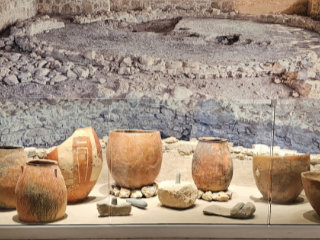
Paphos Archaeological Museum
There are lots of interesting archaeological sites dotted around Paphos. When they have been excavated, their contents invariably end up in the local museums, either in Nicosia or in the Paphos Archaeological Museum, which is where we are headed in this article.Related Pages

MapKissonerga Skalia Excavations
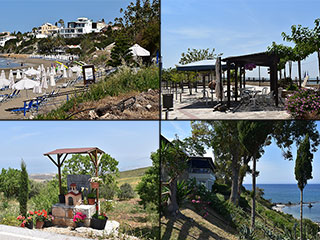
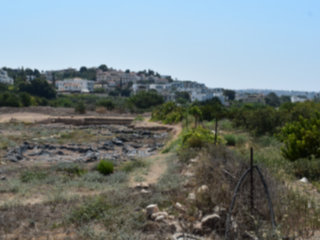
When we last visited the Archaeological Site at Kissonerga Mosfilia, we couldn't help but notice signs of another dig just down the road. I finally got round to checking it out and thought I would share what I found at Skalia.
Good Pages To Visit

FB PagePaphos Life on Facebook
Like us on Facebook and stay notified of new blog posts.

FB PageOur Facebook Chat Group
Paphos Chat has been created for people who like our site and want to chat using Facebook. You can also easily upload photos of any size here. A lot of people are members of the Facebook chat group and the main forum. It's entirely up to you.
ListBlog Locations
Planning a day out? Then use our map of blog locations as a handy guide. Some of the places we visit our closer to each other than you might think, so take a look and start planning your next adventure...
eBookCyprus Road Trip 01: the Kathikas - Panagia Loop
Let me take you on a journey around the region of Paphos, Cyprus. Starting at Paphos itself, we travel to Akoursos, then Kathikas, Kritou Terra and Simou. We continue past Lasa and Kannaviou, before taking in the delights of Panagia. Getting a bit more adventurous, we visit the abandoned villages of Statos and Agios Fotios, before passing through Choulou, Letymbou and Polemi, and rejoining the main Paphos - Polis road.
The route is suitable for all types of vehicle, and requires no off-roading. The guide contains about 130 photographs including shots of all the road signs you need to pay attention to, as well as some of the highlights you may experience along the way.
There are also several maps which will help you keep your bearings.
You can do this journey in a day, or you can break it up into chunks. You can also do it in reverse, to get some completely different views. It is entirely up to you.