Kissonerga Skalia Excavations
When we last visited the Archaeological Site at Kissonerga Mosfilia, we couldn't help but notice signs of another dig just down the road. I finally got round to checking it out and thought I would share what I found at Skalia.
The Site
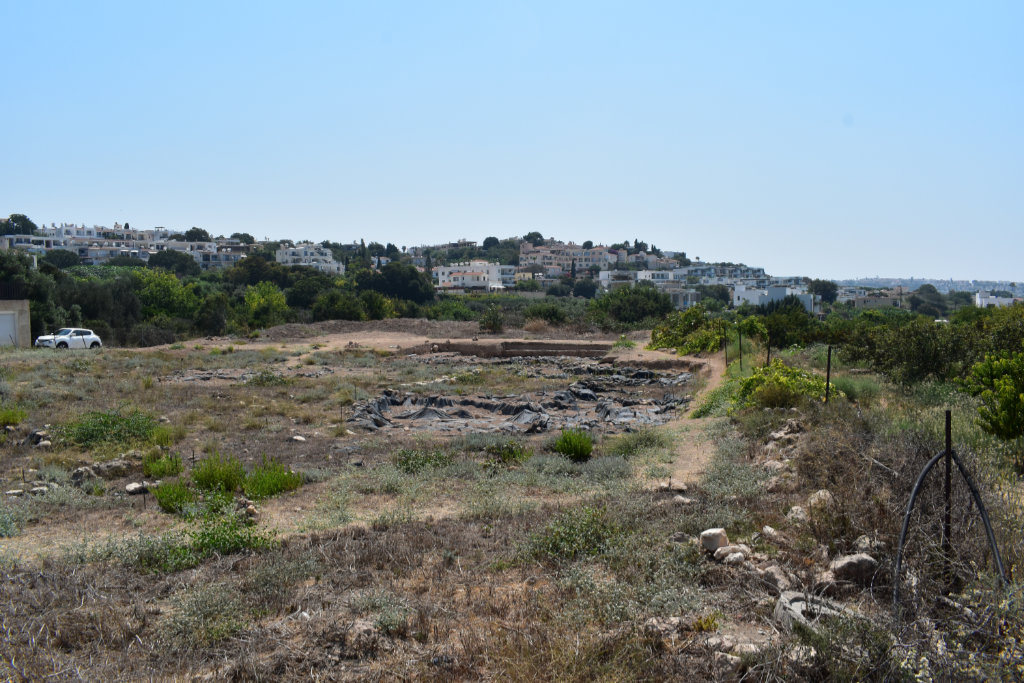
As you drive down from the Mosfilia Site towards the coast, you will see the Skalia site on your left. The first thing I noticed was how mundane it looked. It's just a random field, that's actually a bit higher than the surrounding farmland. Incidently, if you are not sure where it is, there is a link to a map at the foot of each page of the article.
And if you look at the reviews of the site posted on Google Maps, you will find some interesting information:
Kisonerga-Skalia is an ongoing archaeological excavation of an Early Bronze Age single occupation site. It is situated virtually next to the very important Chalcolithic site of Kisonerga-Mosfilia.
It seems that after the abandonment of Mosfilia the new occupants built their village in Skalia.
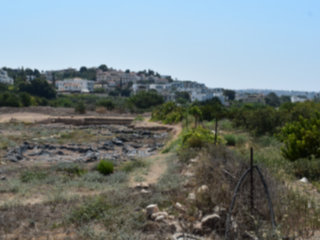
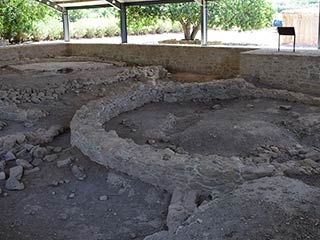
Little is visible, with fragments of the foundations covered with tarpaulins. Perhaps further work will begin. The site was abandoned in 1628 BCE after the eruption of the Thera volcano on Santorini and its subsequent flooding by a 200-meter tsunami.
Objects excavated here are displayed in the Paphos Archeological Museum illustrating life in the Cypriotic Early Bronze Age.

Covered
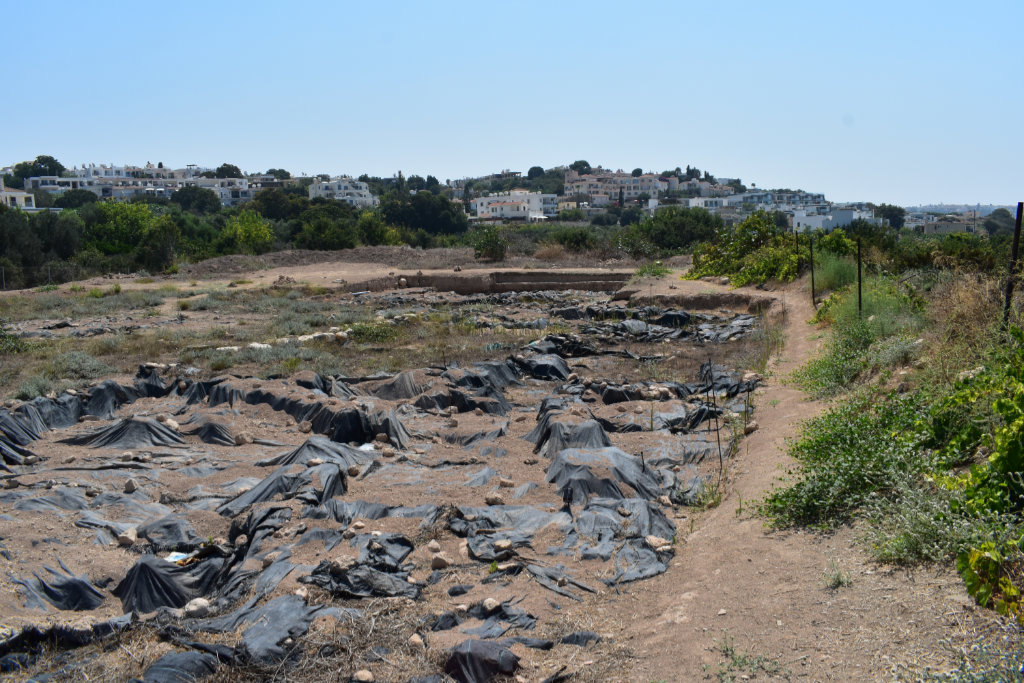
This is an active site, though they are not excavating at the moment. When the site is not being examined it is covered like you see here. The last reported work was performed in 2025. This is a summary of what the Department of Antiquities had to say about that (full report here):
The Department of Antiquities announces the completion of the 2025 excavations at the Bronze Age settlement of Kissonerga-Skalia, directed by Dr Lindy Crewe of CAARI. The site shows a long Bronze Age sequence with earlier Chalcolithic occupation from before 2500 BC (succeeding nearby Kissonerga-Mosphilia) and was abandoned around 1600 BC at the start of the Late Cypriot period. It exemplifies the contemporary shift to large structures and larger-scale production amid flourishing Mediterranean trade; its early abandonment left the remains well-preserved.
Founded as a Philia-phase village around 2500 BC, it flourished until about 1750 BC. Earlier houses were then demolished and material dumped to create a flat area of at least 1,200 m². Large walls (up to 1.2 m wide) formed a complex of courtyards and roofed spaces with mud/plaster floors, used for only a few generations before permanent abandonment around 1600 BC. The complex shows industrial rather than domestic use, with fire installations, grinding/processing areas and storage vessels.
In 2025 the team further exposed the complex. A previously known 1.5 m domed oven in a plaster courtyard was shown to sit in an L-shaped space; at the short end a new ~4 m diameter oven was found - a hard-baked mud-plaster concave hemisphere with low walls but no roof. It contained discarded tools, plaster, sherds and bones, went out of use, was filled and floored over, then superseded by the smaller oven. Wet-sieving recovered terebinth and wheat remains, suggesting possible Bronze Age consumption of a food made from wheat and terebinth seeds.
Foundations
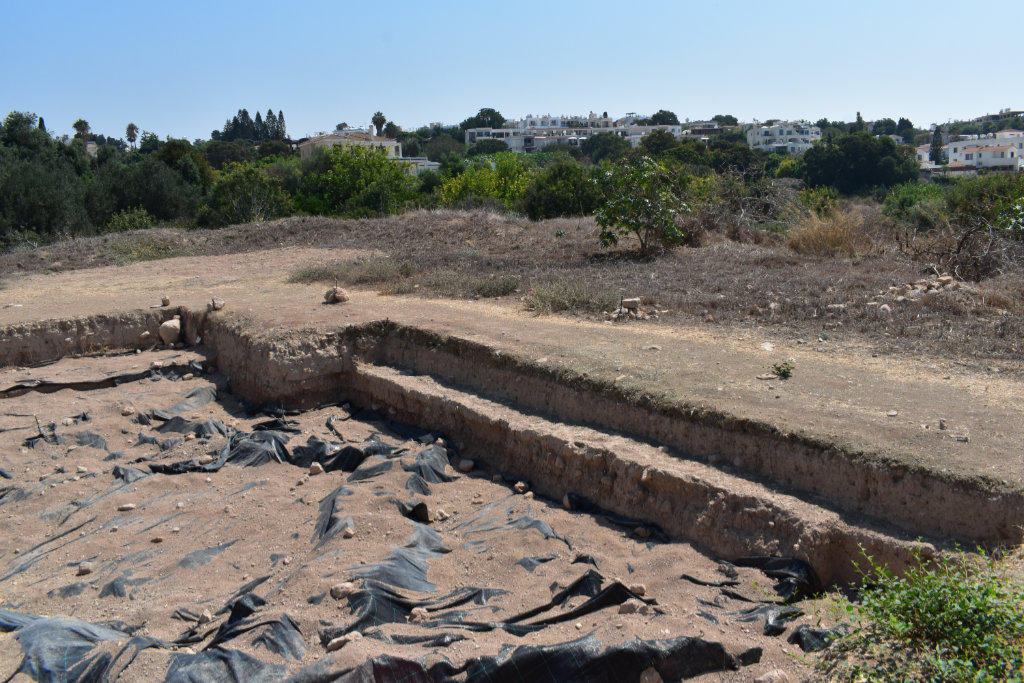
It amazes me though how close to the surface all the excavations are. This site has been here for over 3500 years. I wonder what it looked like during the Hellenic and Roman eras. Were they at all curious about the prior history of the area? I know at the ruins around St Paul's Pillar there is evidence of 6th Century Archaeologists. So who knows?
Shallow
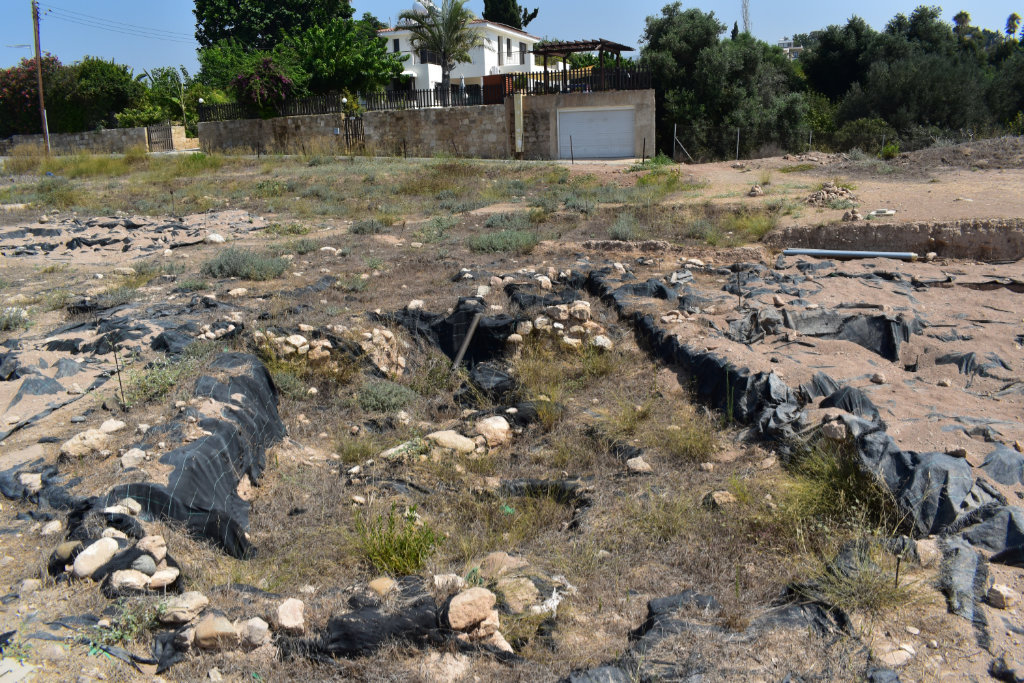
I didn't see any evidence of deep excavation at the site. That's not to say they didn't do any. They might have just filled up after themselves. They seem to have spent most of their time picking through the foundations though.
Towards The Road
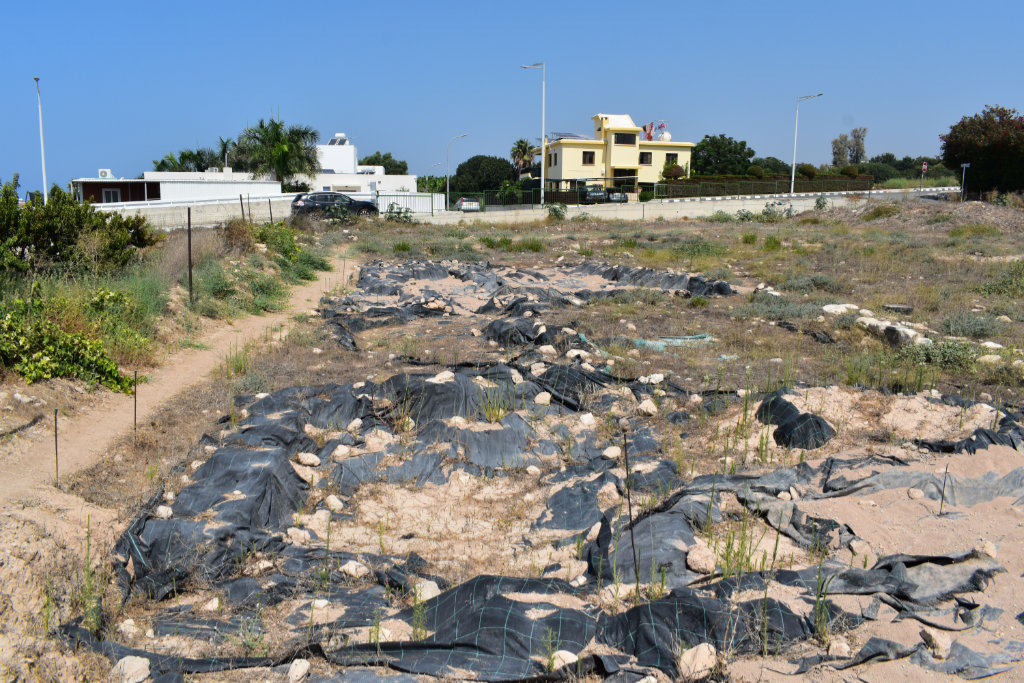
If you are tempted to turn up here with a shovel though, please don't. It might have been a coincidence, but as I was taking pictures, somebody came out of nowhere and was walking nearby to me. I've had similar experiences at other sites too. So don't assume you just start some DIY excavations, because they will not appreciate it at all.
Anyway, let's go to the Museum, and see what they found here...
Page 1 of 3
Related Blogs:
Kissonerga Mosfilia
Tucked away in the lower reaches of Kissonerga, lies a site of great historical importance. Similar in appearance to the ancient village of Lemba, which is currently closed for maintenance, Kissonerga Mosfilia is a perfect way to spend half an hour if you fancy something a little different. Like most of our findings, it was a happy accident that brought us to this ancient settlement. We were avoiding a roadblock and happened to pass this sign on our way to the coast road. Brown signs often signal something interesting, so we stopped to take a look...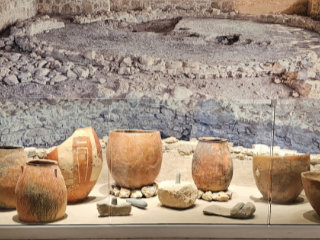
Paphos Archaeological Museum
There are lots of interesting archaeological sites dotted around Paphos. When they have been excavated, their contents invariably end up in the local museums, either in Nicosia or in the Paphos Archaeological Museum, which is where we are headed in this article.Related Pages

MapKissonerga Skalia Excavations
When we last visited the Archaeological Site at Kissonerga Mosfilia, we couldn't help but notice signs of another dig just down the road. I finally got round to checking it out and thought I would share what I found at Skalia.
Good Pages To Visit

FB PagePaphos Life on Facebook
Like us on Facebook and stay notified of new blog posts.

FB PageOur Facebook Chat Group
Paphos Chat has been created for people who like our site and want to chat using Facebook. You can also easily upload photos of any size here. A lot of people are members of the Facebook chat group and the main forum. It's entirely up to you.

ListBlog Locations
Planning a day out? Then use our map of blog locations as a handy guide. Some of the places we visit our closer to each other than you might think, so take a look and start planning your next adventure...
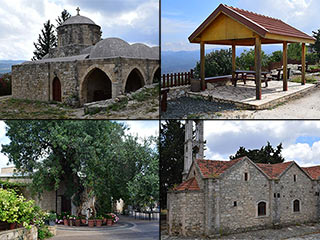
eBookCyprus Road Trip 01: the Kathikas - Panagia Loop
Let me take you on a journey around the region of Paphos, Cyprus. Starting at Paphos itself, we travel to Akoursos, then Kathikas, Kritou Terra and Simou. We continue past Lasa and Kannaviou, before taking in the delights of Panagia. Getting a bit more adventurous, we visit the abandoned villages of Statos and Agios Fotios, before passing through Choulou, Letymbou and Polemi, and rejoining the main Paphos - Polis road.
The route is suitable for all types of vehicle, and requires no off-roading. The guide contains about 130 photographs including shots of all the road signs you need to pay attention to, as well as some of the highlights you may experience along the way.
There are also several maps which will help you keep your bearings.
You can do this journey in a day, or you can break it up into chunks. You can also do it in reverse, to get some completely different views. It is entirely up to you.